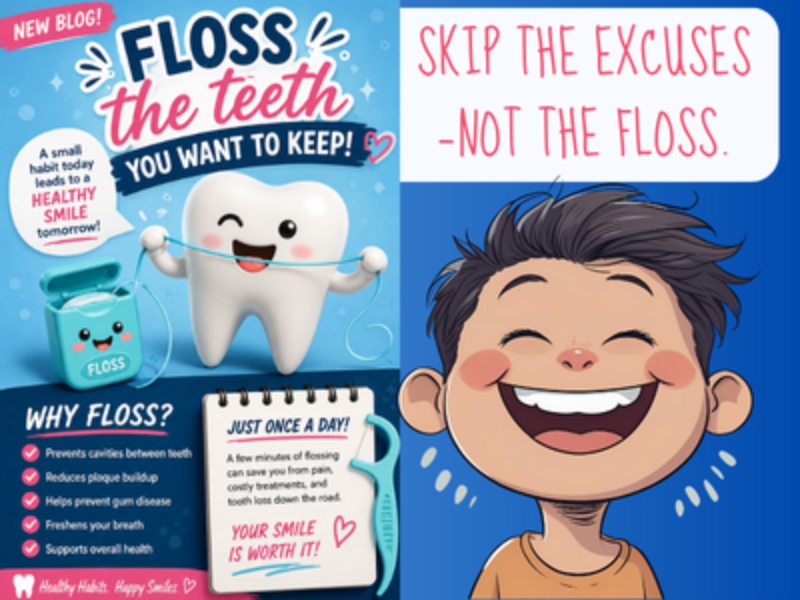

You only have to floss the teeth you want to keep…It's a phrase that dentists have repeated for years because it's true. While brushing twice a day is one of the best habits you can have, your toothbrush can't do the entire job. Some of the most important areas in your mouth simply aren't within reach of the bristles.
Those tiny spaces between your teeth and just below the gumline are where plaque, bacteria, and food particles love to hide. If they're left there day after day, they can quietly lead to cavities, gum disease, bad breath, and even tooth loss.
Brushing Isn't the Whole Story
Think of brushing like washing your hands while wearing rings. You can clean most of the surface, but dirt still hides in the tight spaces.
The same thing happens in your mouth.
Your toothbrush cleans the front, back, and chewing surfaces of your teeth, but it can't effectively clean between them. That's where floss comes in. It removes plaque and debris before they harden into tartar—a stubborn buildup that can only be removed during a professional dental cleaning.
Why Flossing Matters
Daily flossing does much more than remove food stuck between your teeth, it helps:
- Prevent cavities between teeth
- Reduce plaque buildup
- Keep gums, healthy and strong
- Prevent gingivitis before it progresses
- Freshen your breath by removing odor-causing bacteria
- Protect your smile for years to come
Healthy gums are the foundation of healthy teeth. When your gums stay healthy, your teeth have the support they need to last a lifetime.
What Happens When You Skip It?
The effects aren't always immediate, which is why so many people underestimate flossing.
Plaque begins to build up where your toothbrush can't reach. Over time, your gums may become red, swollen, or bleed when you brush. These are early warning signs of gingivitis.
Without treatment, gingivitis can develop into periodontitis—a serious form of gum disease that can cause gum recession, bone loss, loose teeth, and eventually tooth loss.
Many cavities also begin between the teeth, where they often go unnoticed until they require fillings, crowns, or more extensive treatment.
And yes...that persistent bad breath that won't go away? It may be coming from bacteria trapped between your teeth.
Your Mouth Affects More Than Your Smile
Researchers continue to study the connection between oral health and overall health. Gum disease has been associated with an increased risk of conditions including heart disease, diabetes, and certain respiratory illnesses.
While flossing isn't a cure for these conditions, maintaining healthy gums is an important part of supporting your overall well-being.
Make It a Habit
The good news? Flossing only takes a few minutes each day.
If traditional string floss isn't your favorite, try floss picks or a water flosser. The best flossing method is the one you'll actually use consistently.
One simple habit today can help you avoid painful dental problems—and costly treatments—later.
Keep the Smile You Love
At Mid-America Dental and Hearing Center, we believe prevention is always the best investment. Regular brushing, daily flossing, and routine dental checkups work together to keep your smile healthy, comfortable, and confident.
Remember: You only have to floss the teeth you want to keep. If it's been a while since your last dental exam or cleaning, schedule your appointment today and let our team help you protect your smile for years to come.